
Walk into any baby shop and you’re hit with a wall of colourful toys, all promising to boost your little one’s development. Overwhelming, right ? The truth is, the best sensory toys for babies aren’t about buying the most. They’re about matching the toy to what your baby can actually do at each stage.
Matching Toys to Your Baby, Stage by Stage
So let’s break it down by age, month by month, so you know exactly what makes sense and when. If you want to browse a wider range of gear and accessories as your baby grows, you’ll find plenty of options over at https://accessoires-bebes.fr. But first, let’s start where every baby starts : the very beginning.
0 to 3 Months : It’s All About Contrast and Sound
Newborns can’t see much, honestly. Their vision is blurry and they focus best on things about 20 to 30 centimetres from their face. So forget the fancy stuff for now.
What works ? High-contrast toys in black, white and red. Those bold patterns are the ones tiny eyes can actually pick out. Soft rattles with a gentle sound are great too, though your baby won’t grip them yet, you’ll be doing the shaking.
Perso, I found a simple black-and-white cloth book kept my daughter weirdly mesmerised at six weeks. Sometimes the simplest things win.
3 to 6 Months : Grabbing, Chewing, Everything in the Mouth
Now things get fun. Around this age, babies discover their hands, and then they discover that everything goes straight into the mouth. Every single thing.
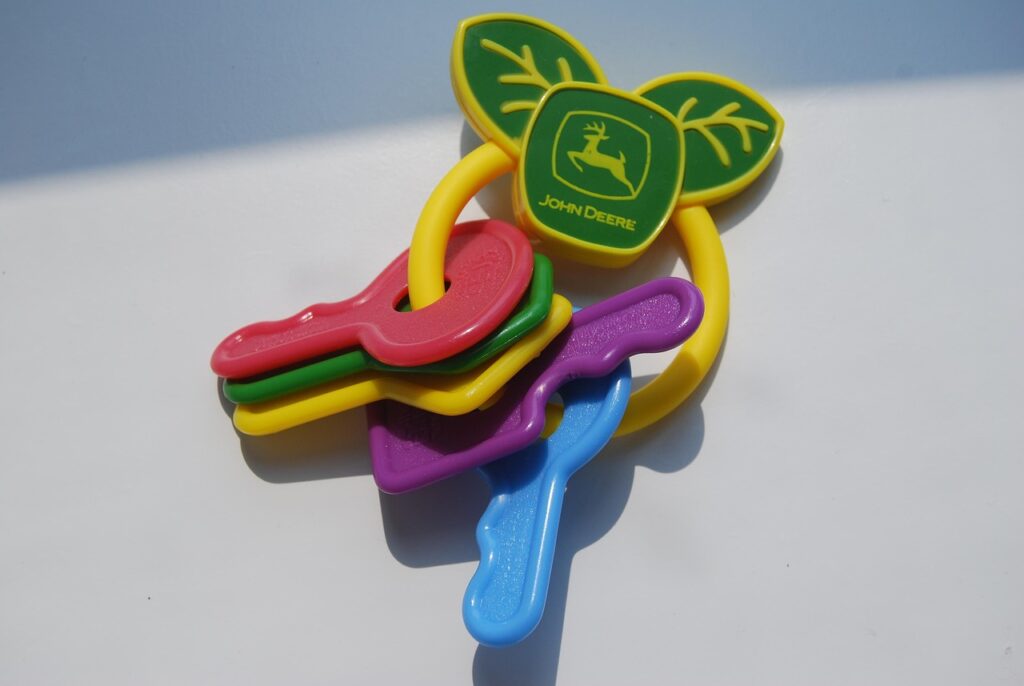
This is prime time for teething toys and textured rattles. Look for pieces that are easy to grip with little hands, lightweight, and safe to chew. Soft rubber, silicone, that kind of thing.
Activity gyms with hanging toys are brilliant here too. Baby lies underneath, bats at the dangling bits, and slowly figures out cause and effect. Have you noticed how proud they look when they actually hit one ? Adorable.
6 to 9 Months : Sitting Up Changes the Game
Once your baby can sit, a whole new world opens up. Their hands are free, they can pass objects from one to the other, and they love anything that reacts.
Great picks at this stage : stacking cups, soft blocks, and toys that make noise when shaken or pressed. Anything with a bit of feedback, really. They’re learning that their actions cause things to happen, and it fascinates them.
Balls are underrated, by the way. A soft, easy-to-hold ball keeps them busy far longer than you’d expect.
9 to 12 Months : On the Move
Crawling, pulling up, maybe those first wobbly steps. Your baby is on the go now, and their toys should encourage that movement.
Think push-along toys, rolling balls, and simple shape sorters. The shape sorter might be a bit early, they’ll mostly just chew the shapes for a while, but they’re starting to understand how objects fit together.
Musical toys with buttons are a hit too. Press, sound, delight. Repeat about four hundred times. Fair warning : some of them are loud.
How Many Toys Does a Baby Actually Need ?
Fewer than you think. Honestly, babies get overwhelmed by too much choice, same as us. A handful of well-chosen toys beats a mountain of them.
My advice ? Rotate them. Keep a few out, hide the rest, and swap every week or two. Suddenly the “old” toy feels brand new again. Saves money and keeps them interested. Win-win.
A Few Safety Points to Keep in Mind
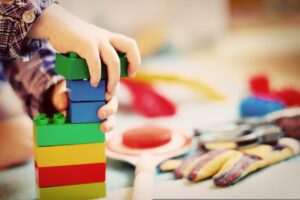
Quick but important. Always check the recommended age on the label, it’s about safety, not just development. Avoid anything with small parts that could be a choking hazard for babies under three.
Give toys a clean regularly, especially the chewable ones. And check now and then for loose bits or damage. A cracked toy gets binned, no exceptions.
The Bottom Line
Choosing the right sensory toys for your baby comes down to one simple idea : match the toy to the stage. Contrast and sound at the start, grabbing and chewing next, then reacting, then moving.
You don’t need a playroom full of stuff. A few good toys, rotated well and suited to your baby’s age, will do far more than an expensive pile gathering dust. So, what stage is your little one at right now ?